The Story Behind the South Indian Breakfast — and Why It Still Matters
A morning tradition that is older than most things we take seriously today.

1. The Morning That Never Changed
Close your eyes and think about a South Indian morning. There is probably a specific smell that comes to mind before anything else. Batter sizzling on a hot tawa. Sambar bubbling on a low flame. Fresh coconut chutney being ground. The sound of a steel tumbler being filled with filter coffee. South Indian breakfast culture is so deeply embedded in daily life that most people who grew up with it do not think of it as a tradition. It simply is the morning.
But it is a tradition. One that is centuries old, nutritionally sophisticated, and quietly extraordinary. The South Indian breakfast that appears on tables across Tamil Nadu, Kerala, Andhra Pradesh, and Karnataka every single morning did not arrive by accident. It was shaped by climate, agriculture, religious practice, and an intuitive understanding of what the body needs at the start of a day in a warm, humid region.
And yet, somewhere between the rise of packaged cereals, overnight oats, and the idea that anything quick is better, the South Indian breakfast has been undervalued. This blog is about why that is wrong, and why traditional South Indian breakfast deserves to be understood for what it actually is: one of the most intelligent morning meals ever designed.
2. Where It All Began — The History Behind the Plate

The South Indian breakfast history begins with the land itself. South India is rice country. The Kaveri delta in Tamil Nadu, the backwaters of Kerala, the fertile plains of Andhra — these regions have been growing rice for thousands of years. And where rice grows, rice-based food follows. Idli, dosa, and idiyappam are all products of a region that had an abundance of rice and the wisdom to ferment it.
Fermentation is the key that unlocks most of the South Indian breakfast. The process of soaking rice and lentils, grinding them together, and leaving the batter to ferment overnight is not a modern food science discovery. It is an ancient practice that South Indian cooks developed intuitively, long before the word probiotic existed. History of idli and dosa traces back over a thousand years, with references to fermented rice cakes appearing in Tamil Sangam literature and medieval texts from Karnataka.
It is also worth noting that the idli as we know it today may not have originated in South India at all. Food historians have traced its earliest documented form to ancient Indonesia, where a fermented steamed rice cake called kedli appears in texts predating South Indian references. The dish likely travelled through trade routes across the Indian Ocean and was adapted by South Indian cooks who refined it over centuries into the soft, white, perfectly round idli we know today. The South Indian breakfast history is, in part, a story of what happens when a great idea meets a great culinary tradition.
The breakfast spread also reflects the influence of temple culture. Many of the dishes that appear on a South Indian morning table, including pongal, kozhukattai, and various rice-based preparations, have direct roots in temple offerings. What was first offered to the deity was then eaten by the devotees. South Indian breakfast traditions carry that sacred origin quietly, even when the meal is eaten in a kitchen rather than a temple courtyard.
Trade and migration shaped the breakfast too. The introduction of coconut from the coastal trade routes of the Chola era transformed South Indian cooking. The coconut chutney that sits beside every dosa today is the product of a millennium of culinary evolution. South Indian breakfast culture is, in the most honest sense, a living history.
And then there is the intelligence of the batter itself. A single batch of well-fermented rice and lentil batter does not produce just one dish. Day one gives you soft, fluffy Idlis — the batter at its most aerated and light. By day two, the batter has thickened and soured slightly, making it perfect for Crispy Dosas, Masala Dosa stuffed with spiced potato, or Podi Dosa finished with gunpowder and ghee. Day three brings Uttapams — thick, soft pancakes topped with onion, tomato, and green chilli. And whatever remains becomes Kuzhi Paniyaram, or Paddu, cooked in a cast iron mould until crispy outside and pillowy within. One batter. Five dishes. A week of mornings taken care of with the same batch of fermented goodness. This is what traditional South Indian breakfast culture understood about food that modern meal planning is still trying to figure out.
3. The Science Your Grandmother Already Knew
Here is what modern nutritional science will tell you about the traditional South Indian breakfast: it is one of the most balanced, gut-friendly, and energetically efficient morning meals you can eat. The fermentation process that produces idli and dosa batter increases the bioavailability of nutrients, introduces beneficial bacteria, and makes the food significantly easier to digest than its unfermented equivalent.
The combination of rice and lentils in the batter creates a complete protein, providing all essential amino acids in a single meal. Health benefits of South Indian breakfast include sustained energy release, improved gut health, better calcium absorption, and a natural cooling effect on the body — all critical in a climate where heat is the baseline condition. South Indian grandmothers knew none of this in scientific terms. They just knew it worked.
Sambar, the tamarind-based lentil broth that accompanies almost every South Indian breakfast, is its own nutritional story. Rich in protein, fibre, and antioxidants from its spice base, it adds warmth and digestive support to a meal that is already doing a great deal for the body. Nutritional value of South Indian breakfast is not a modern discovery.
Filter coffee, the final component of the South Indian breakfast culture morning ritual, completes the picture. Strong, decoction-based, and served with full-fat milk, it is a very different proposition from the instant coffee that has replaced it in many households. The slower extraction of the decoction process produces a coffee that is lower in acidity and richer in flavour — a morning drink that was designed for the long, warm day ahead.
Two dishes that often get overlooked in conversations about South Indian breakfast are Pazhaya Soru and Ragi Koozh. Pazhaya Soru, leftover rice soaked overnight in water and eaten the next morning with onion, green chilli, and a small pour of buttermilk, is one of the oldest and most nutritionally intelligent breakfasts in the Tamil tradition. The overnight soaking triggers fermentation, increases iron and potassium content significantly, and produces a meal that is cooling, filling, and deeply grounding. Ragi Koozh, a porridge made from finger millet, is the working community's breakfast — thick, slow to digest, and sustaining through a long morning of physical labour. Both dishes are proof that semantic South Indian breakfast traditions were built around the body's actual needs, not convenience or presentation.
4. Why the South Indian Breakfast Still Belongs at the Table
The question of why South Indian breakfast history matters today is really a question about what we lose when we trade tradition for convenience. Quick food is not bad food. But it rarely carries the nutritional intelligence, the cultural meaning, or the sensory satisfaction of a meal that has been refined over centuries.
The South Indian breakfast asks something of you. It asks you to plan the night before, to soak the rice and lentils, to let the batter ferment. It asks you to be present in the morning rather than grabbing something on the way out. And in return, it gives you a meal that sustains you properly, connects you to something larger than your own morning routine, and tastes genuinely good in a way that cereal from a box simply does not. Why South Indian breakfast is healthy goes beyond nutrition. It is about the relationship between the cook, the food, and the person eating it.
There is also the matter of identity. Traditional South Indian breakfast is one of the clearest expressions of regional food culture there is. When you eat an idli with sambar and coconut chutney, you are participating in something that millions of people have done every morning for centuries. That continuity is worth something. It is worth protecting, worth teaching to the next generation, and worth choosing over convenience when the morning allows for it.
5. Breakfast at Pushpa's Kitchen
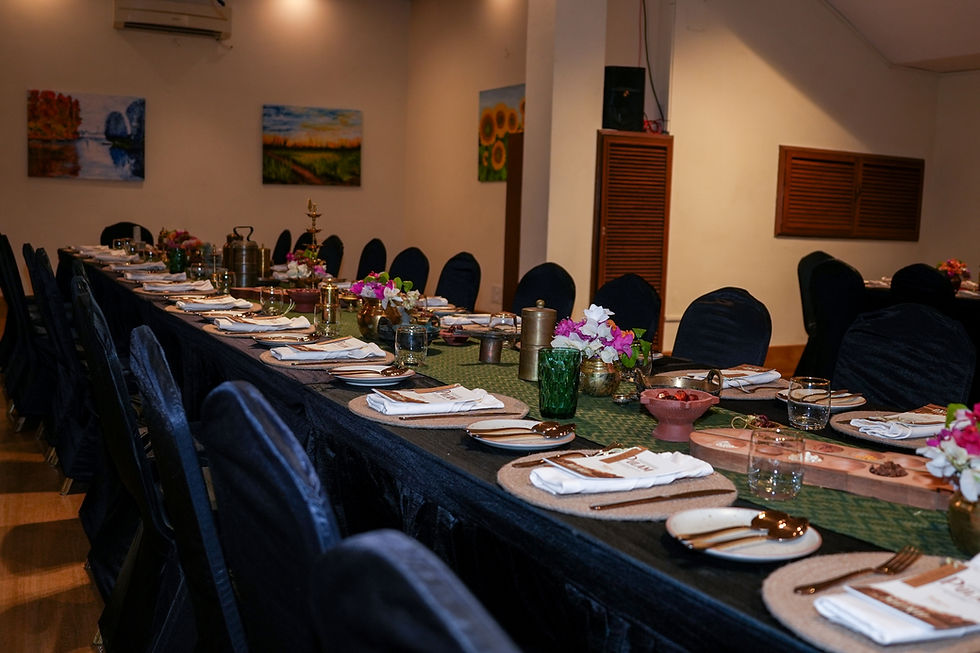
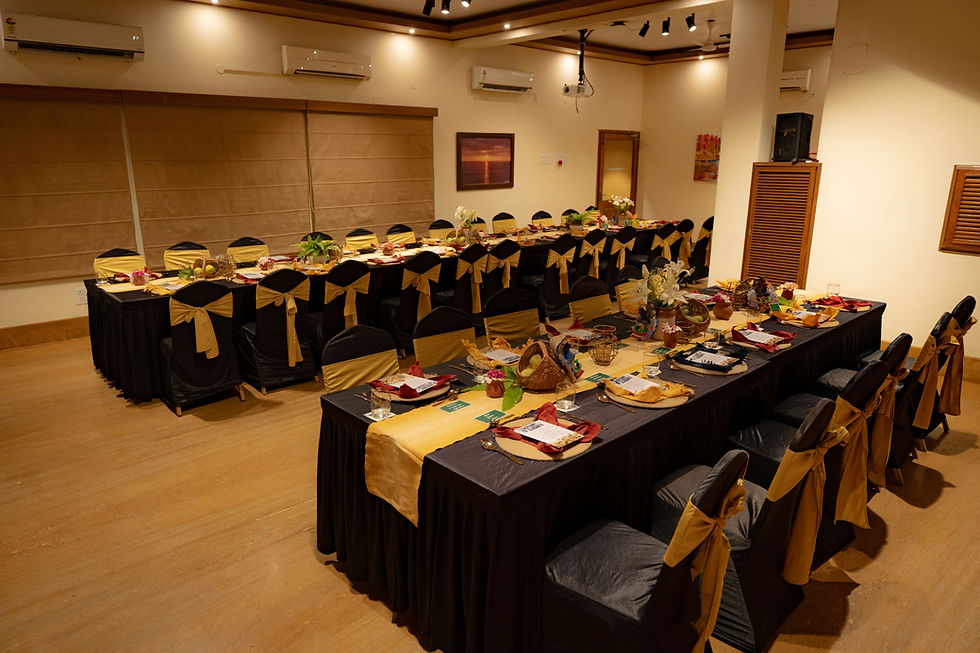
At Pushpa's Kitchen, the South Indian breakfast is not an afterthought. Guests who stay at Hanu Reddy Residences wake up to a breakfast that is made fresh every morning, prepared with the same care and intention that goes into every experience we create. Hot idli. Fresh sambar. Coconut chutney ground that morning. Filter coffee served the way it should be. A glass of Ragi Kanji when the season calls for it.
This is not a buffet spread designed to impress. It is a South Indian breakfast designed to nourish. To start the day with food that actually means something. Food that carries the South Indian breakfast traditions that built this cuisine, served with the warmth that makes a guest feel genuinely taken care of.
If you would like to experience what a properly made South Indian breakfast feels like, Pushpa's Kitchen is where that conversation begins. Come to the table. The morning is always worth it.
Want a closer look at how it all comes together? Watch our dosa being made fresh right here: Watch the Reel
A good breakfast does not just start the day. It sets the tone for everything that follows.
📞 Pushpa's Kitchen: +91 74068 86600
📍 Hanu Reddy Residences, 41/19, Poes Garden, Teynampet, Chennai 600086

I enjoyed learning about the history behind South Indian breakfast traditions because food often reflects culture, memories, and community values. Articles like this help people appreciate how traditions continue across generations. During a busy academic period, I was searched for Take my Law class for me while trying to balance different responsibilities. Just like preserving traditions, making thoughtful choices can help maintain balance in everyday life.