How to Plan a Menu That Every Guest Remembers

Why the Menu Is the Most Important Decision You Will Make
Most people spend the most time planning the venue, the decor, and the guest list. The menu gets decided last, often under pressure, often from a standard package. And then the event happens, and the one thing everyone talks about is the food. Event menu planning is not a last-minute decision. It is the foundation of how your guests experience your celebration from the moment they sit down.
Food carries memory in a way that flowers and lighting simply do not. Guests may forget the centrepiece, but they will not forget the dish that surprised them, or the one that reminded them of something from home. A well-planned menu does not just feed people. It creates a moment. And menu planning for events done with intention is the difference between an event that was nice and one that people talk about for months.
At Pushpa's Kitchen, every menu we build begins with a conversation, not a catalogue. Here is what that conversation always covers, and what you should be thinking about before you plan yours.
Step 1: Know Your Guests Before You Know Your Dishes

The most common event menu planning tips focus on cuisines and courses. But the real starting point is your guest profile. Who is coming? What are their ages, dietary preferences, cultural backgrounds, and expectations? A menu built for a multigenerational family gathering is very different from one built for a corporate team or an intimate dinner party.
Start by mapping out your crowd. How many vegetarians? Are there guests with dietary restrictions, allergies, or religious food requirements? Are there children, elderly guests, or people with specific preferences? The answers to these questions should shape every decision that follows. Understanding your guests for menu planning is not optional. It is the foundation everything else is built on.
One detail most people overlook: account for everyone present, not just the guests on the invite list. The photographers, decorators, and support staff working your event need to be included in the headcount and the menu plan. A thoughtful event menu considers every person in the room, not just the ones seated at the main table.
Step 2: Build the Menu Around the Occasion
Once you know your guests, you can start thinking about the menu itself. How to plan an event menu that fits the occasion begins with asking a simple question: what kind of feeling do you want the food to create? A celebratory birthday lunch calls for colour, variety, and a few indulgent touches. A festive family gathering calls for familiar, comforting dishes rooted in tradition. A corporate event calls for food that is easy to eat, not too heavy, and professionally presented.
Think about the flow of the meal, not just the dishes in isolation. A good event menu structure moves guests through the meal with intention. Start with something light and welcoming. Build through the mains. End with something memorable. Every course should feel like a natural progression, not a random collection of dishes placed together because they were available.
Seasonality matters more than most people think. A menu planning for events approach that works with the season rather than against it produces fresher, better-tasting food at a lower cost. In summer, lean into cooling dishes, lighter proteins, and seasonal fruits. In winter, slow-cooked gravies, richer flavours, and warming spices come into their own. Seasonal event food menu ideas are always the best-tasting ones because the ingredients are at their peak.
Step 3: Make the Practical Decisions Early
The creative part of event menu planning tips is exciting. The practical part is where most people run into trouble. Here is what needs to be decided early and clearly.
Quantity: Underestimating how much food to order is one of the most common mistakes in catering menu planning. Work with your caterer to calculate quantities based on the type of event, the time of day, and the guest profile. A lunch event with a working crowd needs more food than an evening cocktail gathering. Get this wrong and no amount of good food will fix the experience.
Service style: Buffet, plated, family-style, or live counters. Each service style creates a different atmosphere and suits different occasions. A formal sit-down dinner calls for plated courses. A large family gathering works better with a buffet. A festive event benefits from live counters where guests can watch the food being prepared. The right catering service style is the one that matches the mood of your occasion.
Timing: When does the food come out? For a multi-hour event, there should be a clear sequence. Starters with welcome drinks. Mains at the height of the gathering. Dessert as the natural close. How to plan event menu timing means thinking about the event as a whole, not just the food in isolation. A caterer who understands event flow will help you get this right.
A Menu Worth Remembering Starts with the Right Conversation
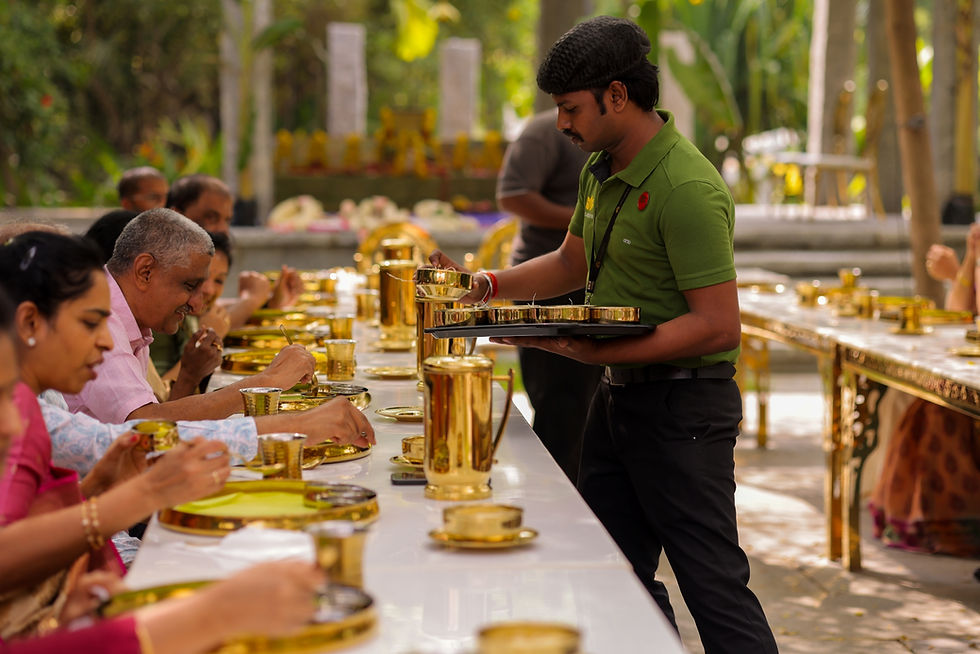
The best event menus are never the ones chosen from a standard list. They are the ones that came from a genuine conversation about the occasion, the guests, and what the host wanted people to feel when they sat down to eat. That conversation is the most valuable part of the menu planning for events process, and it is the one most people skip because they are in a hurry.
Take the time. Ask the right questions. Think about your guests before you think about the dishes. Build the menu around the occasion, not the other way around. And choose a caterer who starts with a conversation rather than a catalogue. The difference will show up on every plate.
If you are planning an event in Chennai and want a menu built around your occasion and your guests, Pushpa's Kitchen would love to help. Every menu we build begins exactly the same way. With a conversation and with your event in mind.
The best menus are not chosen. They are planned. And planning starts with knowing your people.
📞 Pushpa's Kitchen: +91 74068 86600


Comments